
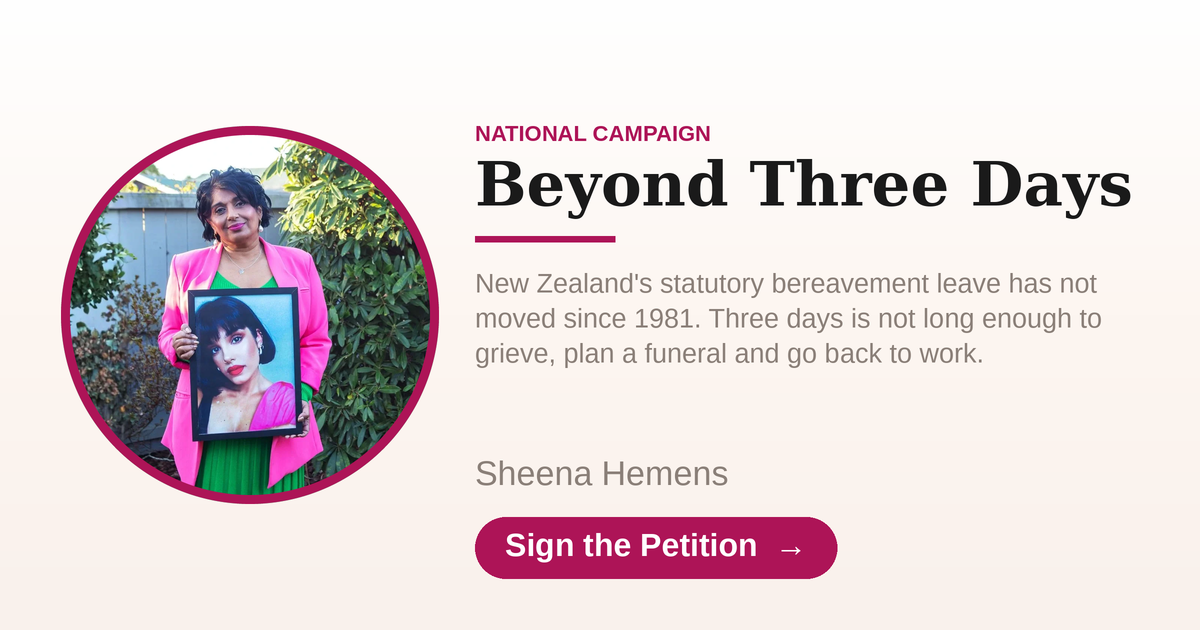
Did you know that if you lose an immediate family member, someone you love dearly, by NZ law, you only get three days of bereavement leave?
Help lift New Zealand’s statutory bereavement leave from three days to ten. Every signature moves the campaign closer to change.
You may be lucky and work for a company who realises that a long weekend is not long enough, and who gives you more time and care. But should the time to grieve be down to an employer lottery?
In 2023 I didn’t know you got just three days.
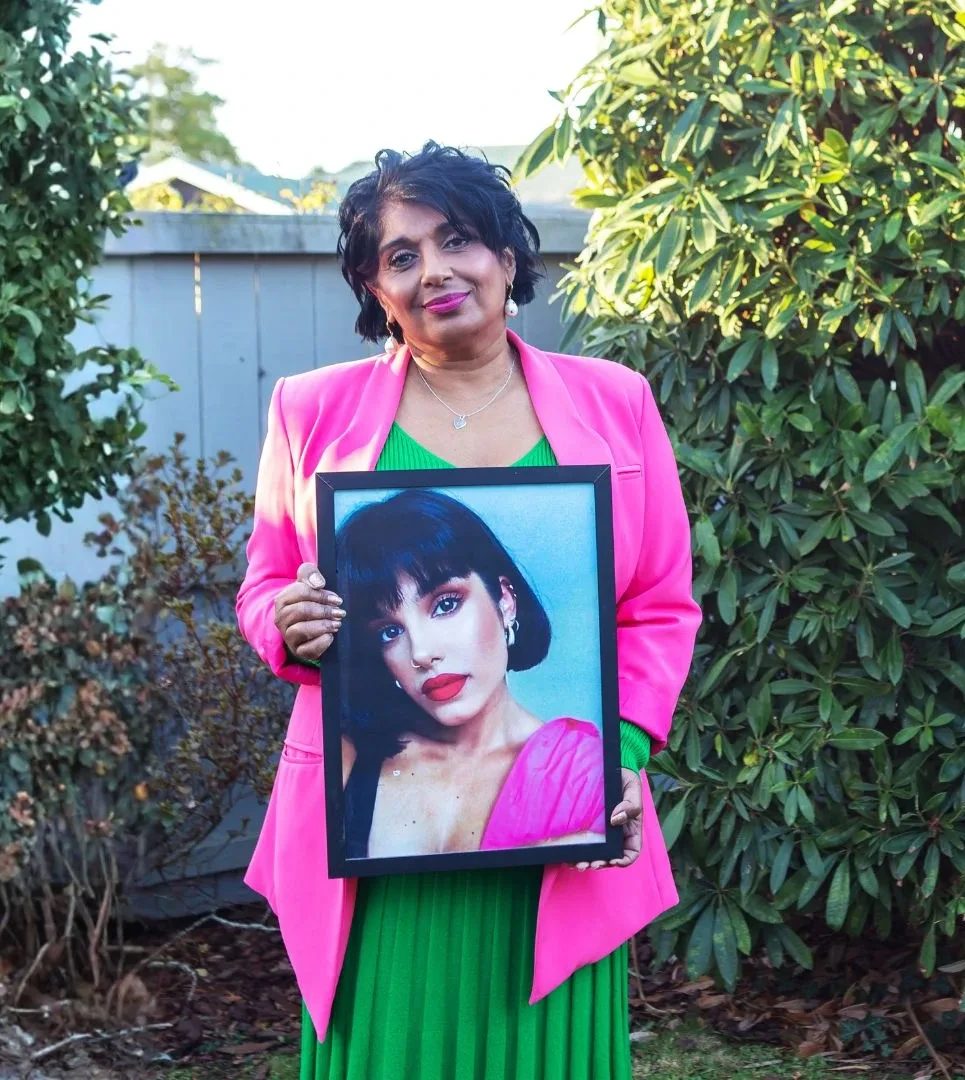
I found this out the hard way. In early 2023, in the space of six months, I lost my daughter Lauren in a traumatic road traffic accident. I lost my business due to Covid, my relationship failed and I found myself homeless. I know what grief does to a body, how the elephant on your chest feels, how your brain won’t hold a thought. And what it feels like when the world expects you back at your desk as if nothing has happened.
I was self employed so I didn’t have to do anything but heal, but my daughter Charlotte, Lauren’s identical twin, was told she had to be back at work three days after losing her twin sister.
It’s why I started Beyond Three Days, the national campaign to lift New Zealand’s statutory bereavement leave, a number that hasn’t moved since 1981. The campaign has taken me into the media and into Parliament’s select committee process, and into hundreds of conversations with people whose hardest moment was met with silence at work.
Three days is nowhere near enough time to grieve, plan a funeral, then go back to work as if nothing has happened.
Media coverage: NZ Herald | NZ Woman’s Day | Capsule | Chris Lynch Media | Newstalk ZB | Duncan Webb, MP
How will this be paid for?
The Beyond Three Days campaign has put forward a workable, state-funded solution to New Zealand’s bereavement leave shortfall, ensuring grieving workers get the time they need without adding financial pressure to struggling businesses.
The campaign has formally presented its funding model to Workplace Relations and Safety Minister Hon Brooke van Velden and the Ministry of Business, Innovation, and Employment (MBIE).
We have always maintained that supporting grieving workers must be done in a way that respects economic realities. Forcing a traumatised worker back to work after just 72 hours creates an invisible productivity crisis. However, expecting small businesses to absorb the wage costs of an extension during a tough economic cycle is not the answer. The solution lies in a state-funded mechanism.
The campaign’s proposal highlights proven international frameworks and existing domestic infrastructure to achieve this balance:
- The UK Small Business Reimbursement: In the United Kingdom, under the Statutory Parental Bereavement scheme, employers pay grieving workers upfront but reclaim 92% to 109% of the cost directly back from the government, entirely protecting small business cash flow.
- The Paid Parental Leave System Blueprint: New Zealand already utilises Inland Revenue infrastructure to distribute crown-funded payments for major life transitions. Under the proposed model, days 4 through 10 of an immediate family bereavement would be treated as a state-subsidised “Compassionate Relief” period.

What is the cost to business of ignoring unaddressed grief?
International data from Empathy’s Workplace Benefits Report reveals the high cost of grief in the workplace, if it is ignored.
The data shows that 90% of managers notice a severe performance drop in a bereaved employee returning too early, while 12% of surrounding co-workers see their own productivity plummet due to the outward ripple effects. The data also shows that almost 50% of workers who have experienced loss would leave their job if the support received was inadequate.
New Zealanders are supported by a world-class state safety net through ACC if they suffer a physical injury, yet they face a total absence of state support when their world is shattered by a sudden family death. The Government has a historic opportunity to deliver a landmark compassionate policy that protects workers while costing Kiwi business owners absolutely nothing.
Many businesses have not waited for a change in policy
There are many businesses who already give more than three days bereavement leave. They know it is not enough and they stand by their employees and support them. They understand the true cost is:
- presenteeism (people being at work in body only, but not truly being present), and the dangers associated with this
- retention, with people leaving because they feel unsupported at work
- and personal grievances brought by staff feeling hurt and humiliated by lack of empathy. This can cost businesses tens of thousands of dollars.
Why you should care about this
Your work and personal life do not exist in silos. They intertwine both ways, and the days of employers being able to ignore what is taking place in their employees’ lives are long gone.
Three days is over 40 years old. Our workplaces are not the same as they were then. We care about mental health, wellbeing and we are more inclusive at an employee level. All we are doing is asking for bereavement leave entitlement to be brought up to date.
Sign the petition and share it. Every New Zealander deserves more than a long weekend when someone they love dies.
Media
- NZ Herald – Christchurch mum calls for bereavement leave to rise from three to 10 days
- NZ Woman’s Day – Sheena Hemens’ bereavement leave campaign
- Capsule NZ – Three Days Bereavement Simply Isn’t Enough
- Chris Lynch Media – When Sheena Hemens lost her daughter Lauren in a car accident, 3 days was not enough
- Duncan Webb, MP – interview about the petition to increase the minimum bereavement leave entitlement to ten days
- Newstalk ZB – Sheena Hemens, Beyond Three Days petition founder, on why bereavement leave needs a rethink